
How to Stay Consistent with Wellness Goals in Real Life

Busy parents juggling work and family, students balancing schedules, and older adults rebuilding strength after injury often hit the same wall: staying consistent with wellness goals feels impossible once real life shows up. The tension isn’t laziness or lack of willpower, it’s trying to force an “all-in” routine onto a body, budget, or calendar that can’t support it. Adult wellness consistency challenges also show up when comparison and perfectionism make small efforts feel like they don’t count. A steadier approach comes from inclusive self-care for beginners and holistic wellness goals that flex with changing energy, ability, and seasons of life.
Build a Wellness Plan That Fits Your Real Life
This process helps you pick the right kinds of wellness goals, turn them into realistic self-care targets, and place them into your week without needing a perfect schedule or body. It matters because inclusive, accessible wellness works best when your plan adapts to your energy, mobility, budget, and support needs.
Start with your needs, not your ideal routine
Take 5 minutes to define your current needs by noticing what feels hardest right now: pain, stress, low energy, loneliness, or inconsistent meals. Then choose one short-term focus for the next 2 to 4 weeks so you are not trying to fix everything at once.Choose one goal type that matches your capacity
Pick a goal category that fits your reality today, such as movement, sleep, nourishment, stress relief, or connection. If you are rebuilding after injury or managing a chronic condition, choose “supportive” goals like range-of-motion, gentle strength, or short walks rather than intensity-based targets.Turn the goal into a small, measurable target
Make your target specific and easy to complete on a rough day: time-based (5 to 10 minutes), frequency-based (2 days a week), or cue-based (after brushing teeth). Aim for a “minimum” version you can almost always do, plus an “extra” option for high-energy days.Weave it into your existing schedule
Look for two repeatable anchors already in your day and accommodate alongside work by attaching your target to them, like after school drop-off, after lunch, or during a TV show. If you rely on accessibility supports, plan them upfront (transportation, adaptive equipment, a buddy, or a quieter time of day).Review weekly and adjust without judgment
Once a week, note what got in the way and what helped, then edit one thing only: timing, difficulty, or support. Consistency comes from course-correcting, not doubling down, so treat adjustments as progress.
Habits That Make Wellness Stick (Even on Busy Weeks)
Habits matter because they turn motivation into something you can do on low-energy days, not just ideal ones. When practices are flexible, adults seeking inclusive, accessible wellness can stay consistent while honoring pain levels, sensory needs, time, and budget.
Two-Minute Daily Check-In
What it is: Rate energy, stress, and pain 1 to 5, then pick one supportive action.
How often: Daily.
Why it helps: It keeps your plan responsive instead of all-or-nothing.
Minimum Plus Option
What it is: Choose a minimum goal and an optional upgrade when you feel better.
How often: Each workout or self-care session.
Why it helps: You keep the streak without overdoing it.
Anchor Movement to a Routine
What it is: Do 5 to 10 minutes of movement after coffee, meds, or a commute.
How often: 3 to 5 days weekly.
Why it helps: A dependable cue reduces decision fatigue.
Prep One “Easy Win” Meal
What it is: Stock one no-cook protein, one fiber food, and one ready produce.
How often: Weekly.
Why it helps: It supports steady nourishment when life gets chaotic.
Track Your 66-Day Window
What it is: Use median or mean times to commit to 8 to 10 weeks.
How often: Per milestone.
Why it helps: It normalizes slow progress and protects motivation.
Pick one habit this week and adapt it to your family’s real rhythms.
A Simple Rhythm to Monitor and Stay Consistent
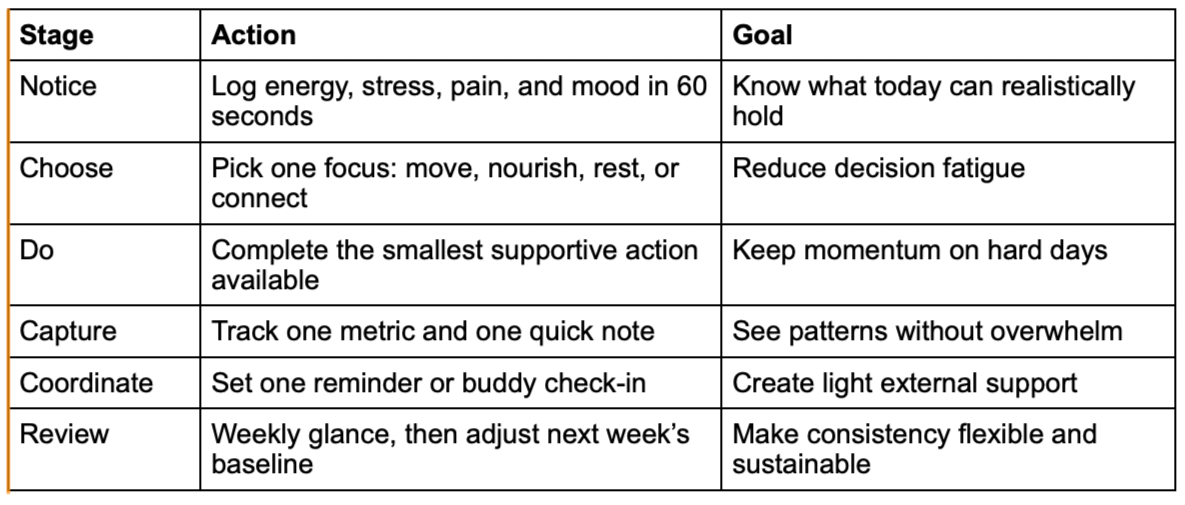
This workflow turns wellness goals into routine wellness monitoring you can actually maintain, even when energy, pain, time, or sensory needs shift. It helps you measure health improvements without overtracking, and it adds gentle accountability methods for self-care so you are not doing it all in your head. Think of it as a loop you repeat, not a plan you perfect.
Stage
Action
Goal
Notice
Log energy, stress, pain, and mood in 60 seconds
Know what today can realistically hold
Choose
Pick one focus: move, nourish, rest, or connect
Reduce decision fatigue
Do
Complete the smallest supportive action available
Keep momentum on hard days
Capture
Track one metric and one quick note
See patterns without overwhelm
Coordinate
Set one reminder or buddy check-in
Create light external support
Review
Weekly glance, then adjust next week’s baseline
Make consistency flexible and sustainable
Notice and Choose keep the plan aligned with your body, while Do builds the streak with less pressure. Capture and Review show what is working, and Coordinate adds support so follow-through is not solely willpower.
Real-Life Consistency: Common Questions Answered
Q: How can I choose realistic wellness goals that fit my lifestyle and diverse needs?
A: Pick goals that match your current capacity, not your “ideal” week. Use a baseline you can do on low-energy days, then add an optional boost on better days. Aim for actions you can complete in 5 to 15 minutes and adapt for pain, mobility, sensory needs, and schedule changes.
Q: What are effective ways to stay motivated and positive when I struggle to keep up with my self-care routine?
A: Treat missed days as data, not failure, and restart with the smallest supportive step available. Keep motivation practical by tying your routine to one clear benefit you can feel, like steadier mood or less stiffness. A quick “done list” of tiny wins can rebuild momentum fast.
Q: How do I create a balanced self-care plan that includes time for exercise, stress reduction, and rest?
A: Build a simple weekly menu: 2 to 4 short movement sessions, daily calming practice, and protected sleep wind-down. Rotate intensity so your body gets both challenge and recovery, especially during high-stress weeks. If you are overwhelmed, prioritize rest plus gentle movement first.
Q: What strategies can help me track my progress and hold myself accountable to my wellness goals?
A: Track one meaningful metric, like energy after lunch or sleep quality, plus one note about what helped. Add light accountability by scheduling check-ins with a friend or setting a single recurring reminder. If you are in a group setting, it can help to know that implementing a wellness program often supports follow-through through shared structure.
Q: What options exist for someone feeling stuck or uncertain about their future and wanting to pursue a new path through online learning?
A: Start by choosing a direction that solves a real problem you care about, then set a repeatable study window that does not compete with recovery. For example, if you are earning a computer science degree online, planning short, skills-based study blocks can keep progress steady without draining the same energy you need for sleep and stress regulation. The Pomodoro technique can make learning feel doable alongside wellness by keeping sessions short and paced. Pair your study habit with one small daily self-care anchor so stress stays manageable.
Resetting After Setbacks to Sustain Real-Life Wellness Goals
Real life will still bring late nights, busy weeks, and missed days that can drain wellness motivation reinforcement and make self-care feel fragile. The steadier path is the mindset this guide centers on: flexible, small-step consistency, a positive mindset for fitness goals, and overcoming setbacks in self-care by resetting quickly instead of judging yourself. With that approach, progress starts to feel repeatable, and a sustained wellness commitment becomes something that fits your life rather than fights it. Consistency is built by resetting fast and choosing the next small step. Choose one tiny action to do tomorrow, something you can keep even on a hectic day, and celebrate that you showed up at all. That simple rhythm builds resilience and supports the health and stability you want for the long run.
Author :
Susan Treadway - susan.treadway@rehabholistics.com